Author Archive
Thursday, May 13th, 2021
I noted in an earlier post the hypothesized example of (CO)3Fe⩸C[1] as exhibiting a carbon to iron quadruple bond and which might have precedent in known five-coordinate metal complexes where one of the ligands is a “carbide” or C ligand. I had previously mooted that the Fe⩸C combination might be replaceable by an isoelectronic Mn⩸N pair which could contain a quadruple bond to the nitrogen. An isoelectronic alternative to FeC could also be FeN+. Here I explore the possibility of realistic candidates for such bonded nitrogen.
(more…)
References
- A.J. Kalita, S.S. Rohman, C. Kashyap, S.S. Ullah, and A.K. Guha, "Transition metal carbon quadruple bond: viability through single electron transmutation", Physical Chemistry Chemical Physics, vol. 22, pp. 24178-24180, 2020. https://doi.org/10.1039/d0cp03436c
Posted in crystal_structure_mining, Interesting chemistry | No Comments »
Thursday, May 13th, 2021
The proposed identification of molecules with potential metal to carbon quadruple bonds, in which the metal exhibits trigonal bipyramidal coordination rather than the tetrahedral modes which have been proposed in the literature[1],[2],[3] leads on to asking whether simple trigonal coordination at the metal can also sustain this theme?
(more…)
References
- A.J. Kalita, S.S. Rohman, C. Kashyap, S.S. Ullah, and A.K. Guha, "Transition metal carbon quadruple bond: viability through single electron transmutation", Physical Chemistry Chemical Physics, vol. 22, pp. 24178-24180, 2020. https://doi.org/10.1039/d0cp03436c
- A.J. Kalita, S.S. Rohman, C. Kashyap, S.S. Ullah, I. Baruah, L.J. Mazumder, P.P. Sahu, and A.K. Guha, "Is a transition metal–silicon quadruple bond viable?", Physical Chemistry Chemical Physics, vol. 23, pp. 9660-9662, 2021. https://doi.org/10.1039/d1cp00598g
- L.F. Cheung, T. Chen, G.S. Kocheril, W. Chen, J. Czekner, and L. Wang, "Observation of Four-Fold Boron–Metal Bonds in RhB(BO
<sup>–</sup>
) and RhB", The Journal of Physical Chemistry Letters, vol. 11, pp. 659-663, 2020. https://doi.org/10.1021/acs.jpclett.9b03484
Posted in Interesting chemistry | No Comments »
Monday, May 10th, 2021
Introductory chemistry will tell us that a triple bond between say two carbon atoms comprises just one bond of σ-axial symmetry and two of π-symmetry. Increasingly mentioned nowadays is the possibility of a quadruple bond between carbon and either itself or a transition metal, as discussed in the previous post. Such a bond comprises TWO bonds of σ-axial symmetry. Since most people are unfamiliar with such double bonds and in particular with how that second σ-bond sits with the first, I thought it would be interesting to show such an orbital. This one is a localised orbital 41, selected from the previous post for the molecule (PH3)2(CN)2Mo⩸C. (more…)
Posted in Interesting chemistry | 3 Comments »
Saturday, May 8th, 2021
Following from much discussion over the last decade about the nature of C2, a diatomic molecule which some have suggested sustains a quadruple bond between the two carbon atoms, new ideas are now appearing for molecules in which such a bond may also exist between carbon and a transition metal atom. A suggested, albeit hypothetical example was C⩸Fe(CO)3[1]. Iron has a [Ar].3d6.4s2 electronic configuration and if we ionise to balance a C4- ligand, the iron becomes formally FeVI or [Ar].3d4. By adding 14 electrons deriving from the seven “bonds” to the 3d4, including a quadruple count from carbon, the Fe formally completes its 18-electron valence shell, as also found in e.g. Ferrocene.
(more…)
References
- A.J. Kalita, S.S. Rohman, C. Kashyap, S.S. Ullah, and A.K. Guha, "Transition metal carbon quadruple bond: viability through single electron transmutation", Physical Chemistry Chemical Physics, vol. 22, pp. 24178-24180, 2020. https://doi.org/10.1039/d0cp03436c
Posted in crystal_structure_mining, Interesting chemistry | No Comments »
Wednesday, April 7th, 2021
In the preceding post, I looked at a computed mechanism for the hydrolysis of a ketal by water. Of course, pure water consists of three potential catalysts, water itself or [H2O], and the products of autoionisation, [OH–] and [H3O+]. The latter are in much smaller concentration, equivalent to a penalty of ~11.9 kcal/mol on any free energy barrier. Here I take a look at these ion-catalysed routes to see if that penalty can be overcome.
(more…)
Posted in reaction mechanism | No Comments »
Thursday, April 1st, 2021
The previous post was about an insecticide and made a point that the persistence of both insecticides and herbicides is an important aspect of their environmental properties. Water hydrolysis will degrade them, a typical residency time being in the order of a few days. I noted in passing a dioxepin-based herbicide[1] which contains a ketal motif and which in water can hydrolise to a ketone and alcohol. The reverse (acid catalysed) formation of a ketal is a staple of the taught organic chemistry curriculum. Here as a prelude to looking at the hydrolysis of that dioxepin, I take a look at a possible computational mechanism for the hydrolysis of 2,2-dimethoxypropane using pure water, without the help of acid or base.
(more…)
References
- P. Camilleri, D. Munro, K. Weaver, D.J. Williams, H.S. Rzepa, and A.M.Z. Slawin, "Isoxazolinyldioxepins. Part 1. Structure–reactivity studies of the hydrolysis of oxazolinyldioxepin derivatives", J. Chem. Soc., Perkin Trans. 2, pp. 1265-1269, 1989. https://doi.org/10.1039/p29890001265
Posted in reaction mechanism | 1 Comment »
Wednesday, March 24th, 2021
Deltamethin is a pyrethroid insecticide for control of malaria which has been used for a little while. Perhaps inevitably, mosquitoes are developing resistance to it. So what could be done about countering this? Well, perhaps surprisingly, form a polymorph![1] These crystal structure isomers are often highly undesirable; thus Ritonavir, which changed its polymorphic form during manufacture to become far less active (due it has to be said to insolubility). Now a polymorph of Deltamethin has been discovered, which when applied as a powder, increases its effectiveness more than 10 times against Anopheles mosquitoes and provides a potentially new affordable malaria control solution for countries that are loosing protection.
(more…)
References
- J. Yang, B. Erriah, C.T. Hu, E. Reiter, X. Zhu, V. López-Mejías, I.P. Carmona-Sepúlveda, M.D. Ward, and B. Kahr, "A deltamethrin crystal polymorph for more effective malaria control", Proceedings of the National Academy of Sciences, vol. 117, pp. 26633-26638, 2020. https://doi.org/10.1073/pnas.2013390117
Posted in Interesting chemistry | 1 Comment »
Sunday, February 28th, 2021
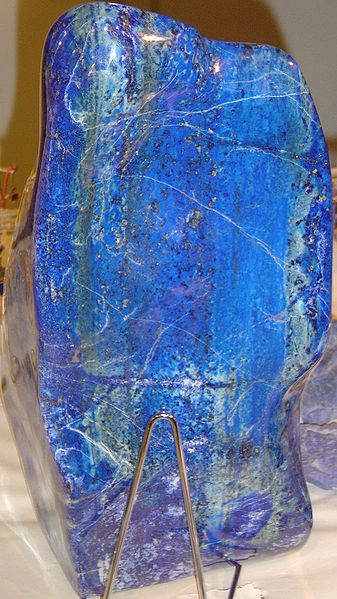
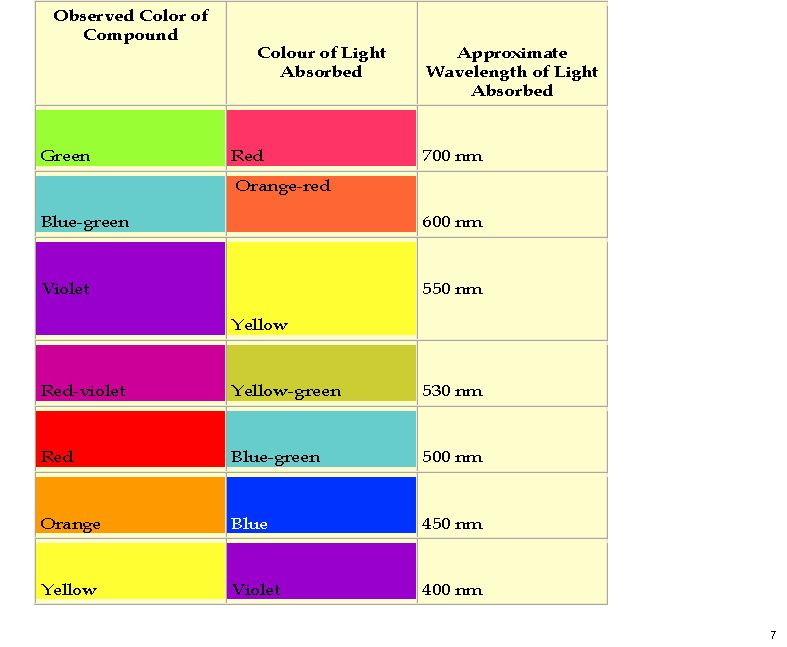
I have occasionally covered the topic of colours here, such as those of flowers and minerals, since it is at least possible to illustrate these using photographs or colour charts to illustrate the theme. But when Derek Lowe took a break from his remarkable coverage of the COVID pandemic to highlight a recent article on the active smelling principle in Vetifer oil[1] I could not resist adding a tiny amount to his must-read story.
(more…)
References
- J. Ouyang, H. Bae, S. Jordi, Q.M. Dao, S. Dossenbach, S. Dehn, J.B. Lingnau, C. Kanta De, P. Kraft, and B. List, "The Smelling Principle of Vetiver Oil, Unveiled by Chemical Synthesis", Angewandte Chemie International Edition, vol. 60, pp. 5666-5672, 2021. https://doi.org/10.1002/anie.202014609
Posted in General | 1 Comment »
Sunday, February 7th, 2021
The last post addressed the concept of “steric clashes” in a pericyclic reaction transition state as an extension of the time honoured practice of building molecular models to analyse reaction outcomes. A modern computer generated model might express this in terms of a NCI (non-covalent-interaction) surface. A few posts ago, I had looked at some “molecules of the year” for 2020, one of which was a “figure-eight” twisted dodecaporphyrin in which an aspect of the reported[1] geometry had struck me as potentially lacking features due to the so-called non-covalent dispersion or van der Waals attractions. So I am revisiting here by adding the NCI surface for this molecule and one other.
(more…)
References
- M. Rickhaus, M. Jirasek, L. Tejerina, H. Gotfredsen, M.D. Peeks, R. Haver, H. Jiang, T.D.W. Claridge, and H.L. Anderson, "Global aromaticity at the nanoscale", Nature Chemistry, vol. 12, pp. 236-241, 2020. https://doi.org/10.1038/s41557-019-0398-3
Posted in Interesting chemistry | No Comments »