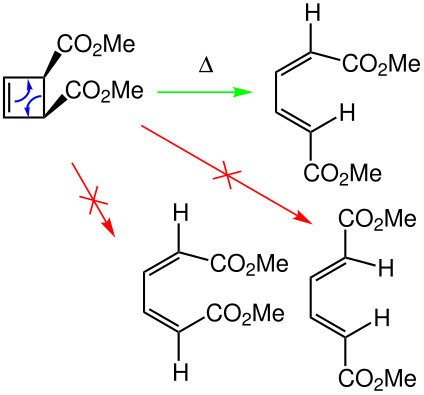
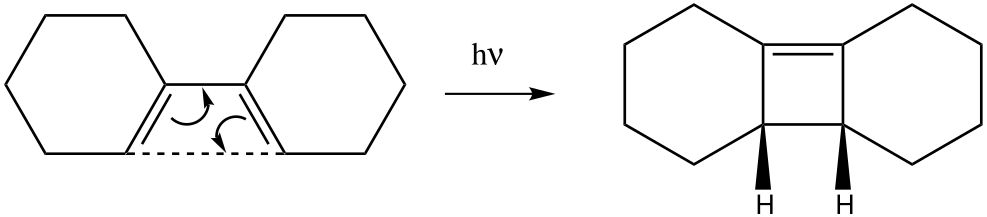
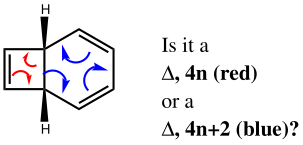
We start at the beginning. In 1958, Vogel reported (DOI: 10.1002/jlac.19586150103) unexpected stereochemistry for ring opening of a cyclobutene, as shown below. Two electron arrows are involved and hence they are 4n systems (n=1).
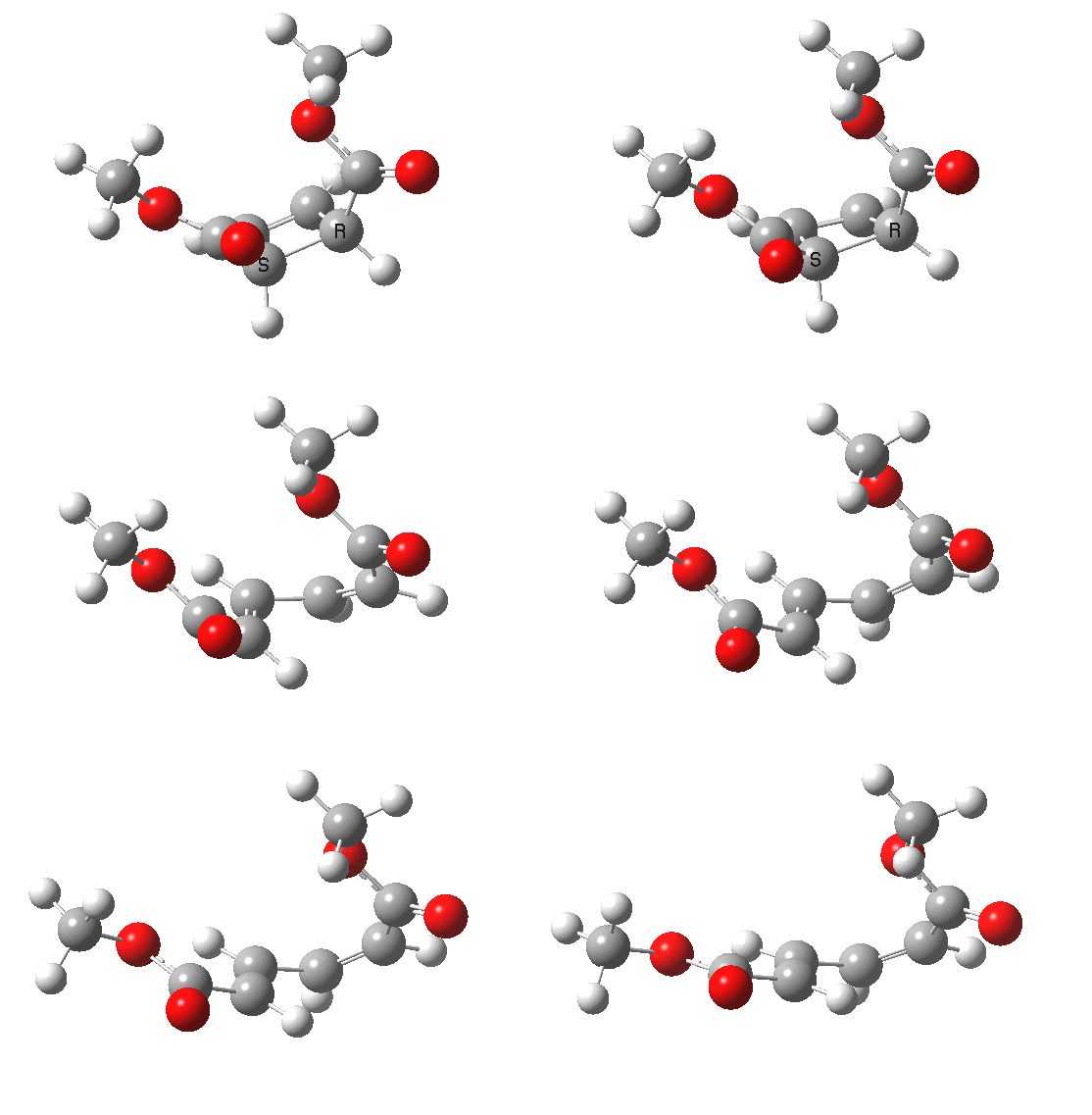
| Intrinsic reaction coordinates | |
|---|---|
| Ring opening of a cyclobutene | Ring closing of a butadiene |
 |
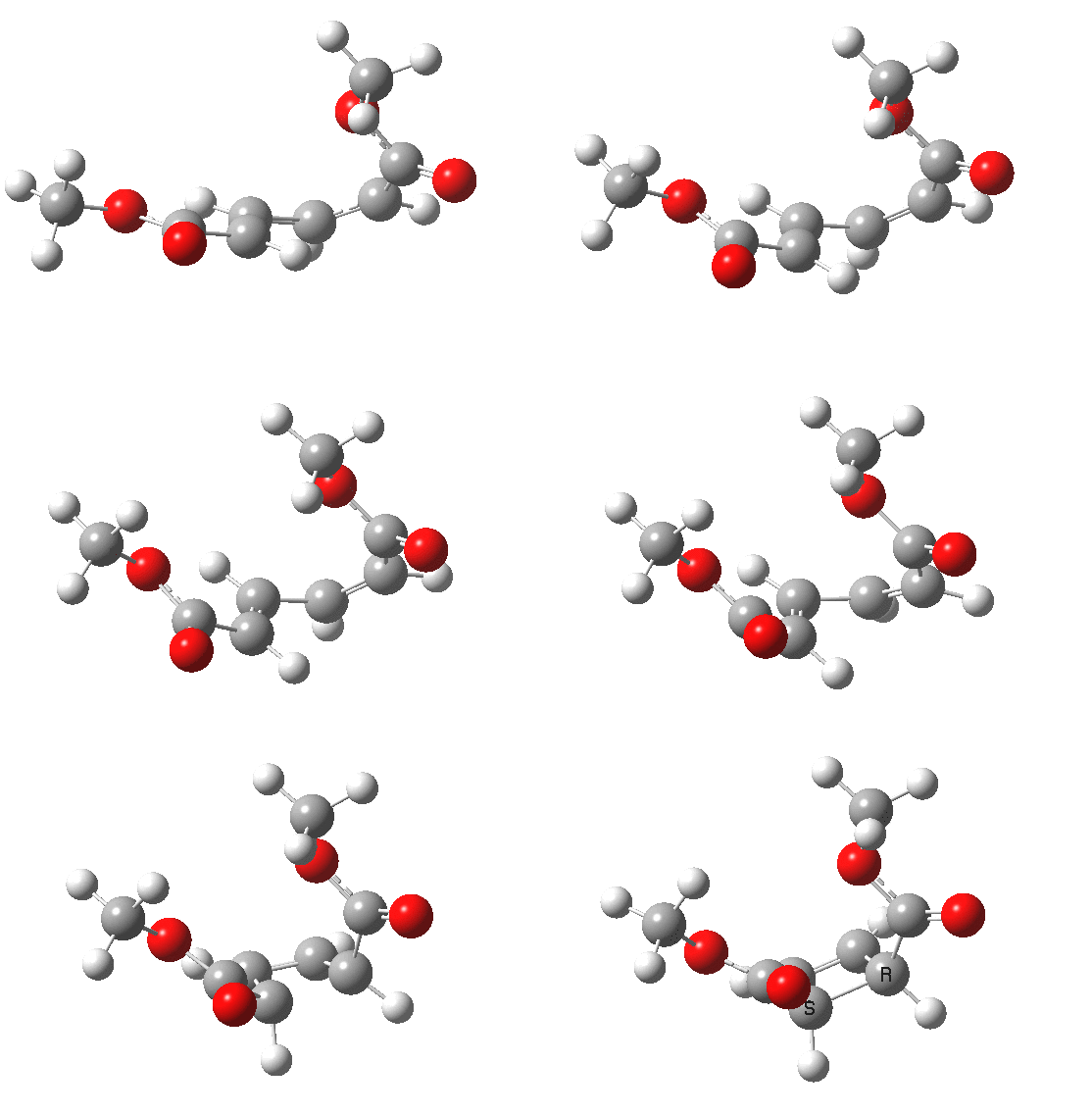 |
Thermally, they will proceed via a Möbius aromatic transition state involving one antarafacial component. Both ester groups will rotate in the same direction (conrotation). The process in this case does not preserve an axis of symmetry exactly, but only approximately. This can also be (optionally) illustrated via the Frontier orbital (HOMO) approach.
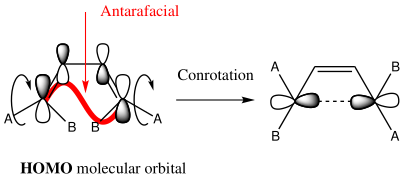
In order to form a new sigma bond, the HOMO of the butadiene fragment must rotate in the sense shown, one node coming from above the plane of the molecule, the other from below (ie antarafacial).
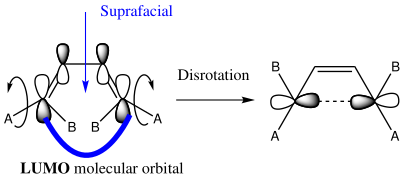
The sense of this can again be seen from the frontier orbital (normally the LUMO but in the excited state occupied by a single electron, and hence effectively the HOMO).
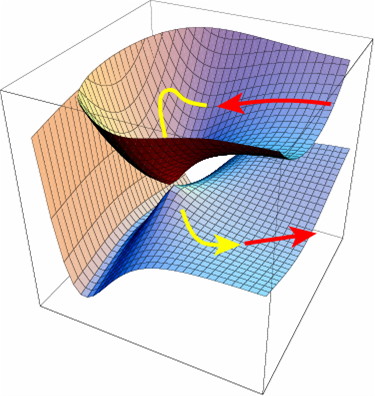
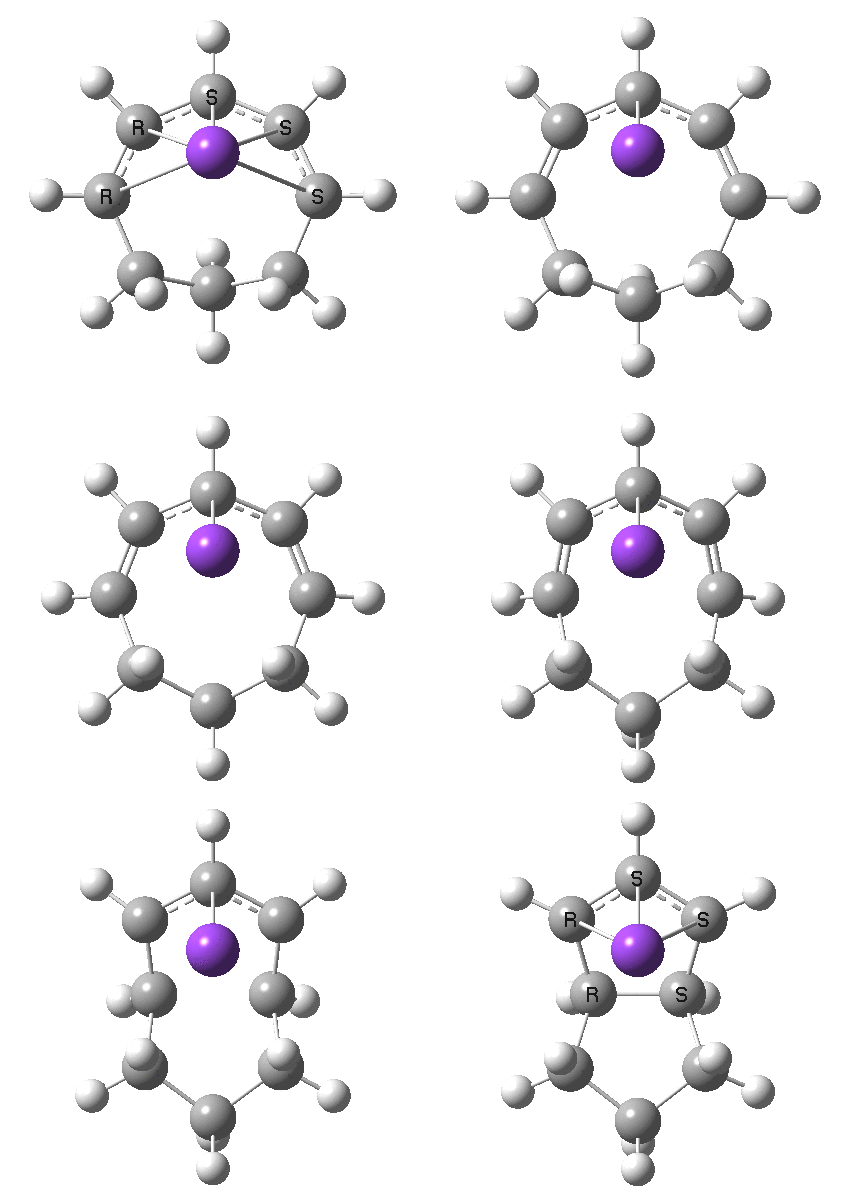
 A more modern approach to understanding photochemical reactions is to locate the conical intersection
rather than the transition state.
A more modern approach to understanding photochemical reactions is to locate the conical intersection
rather than the transition state.
 |
|
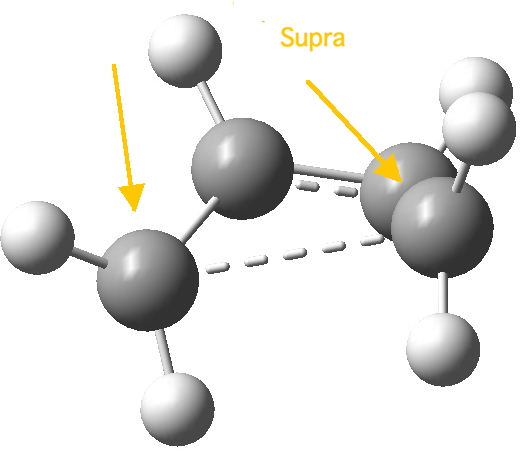
This reveals that the suprafacial specificity is retained but that the plane of symmetry is not.
 |
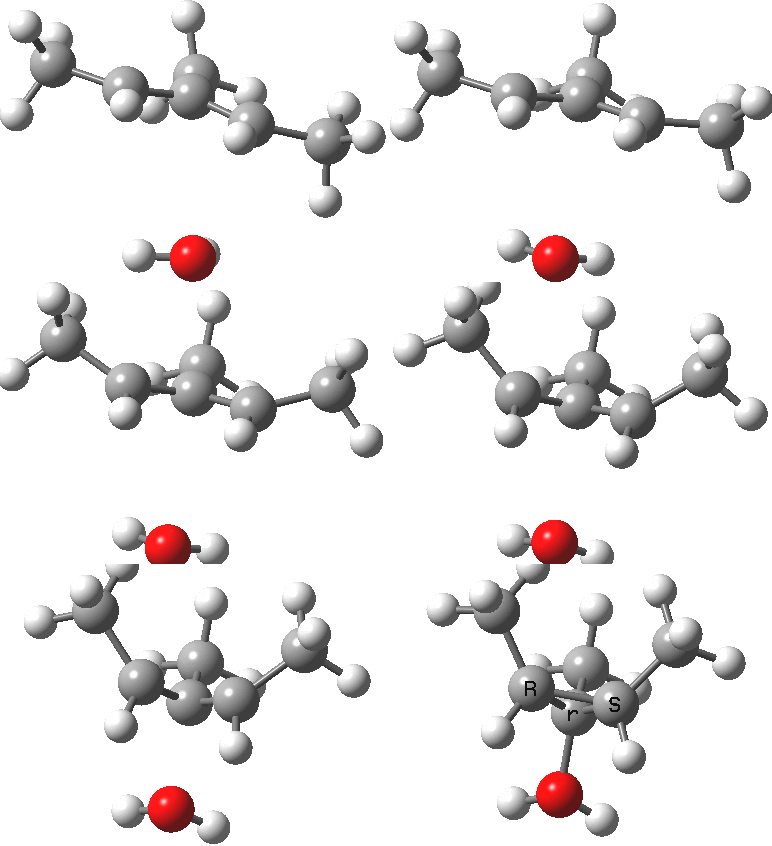 |
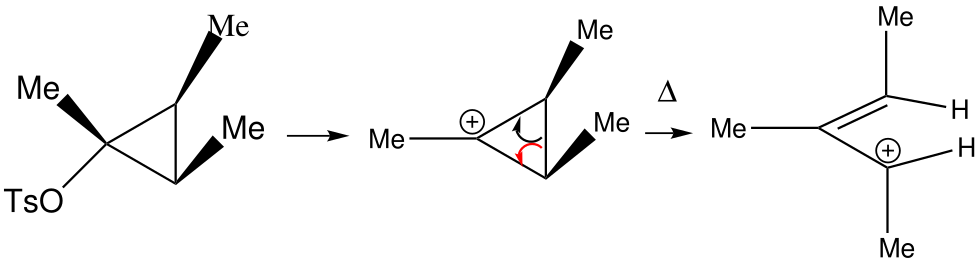
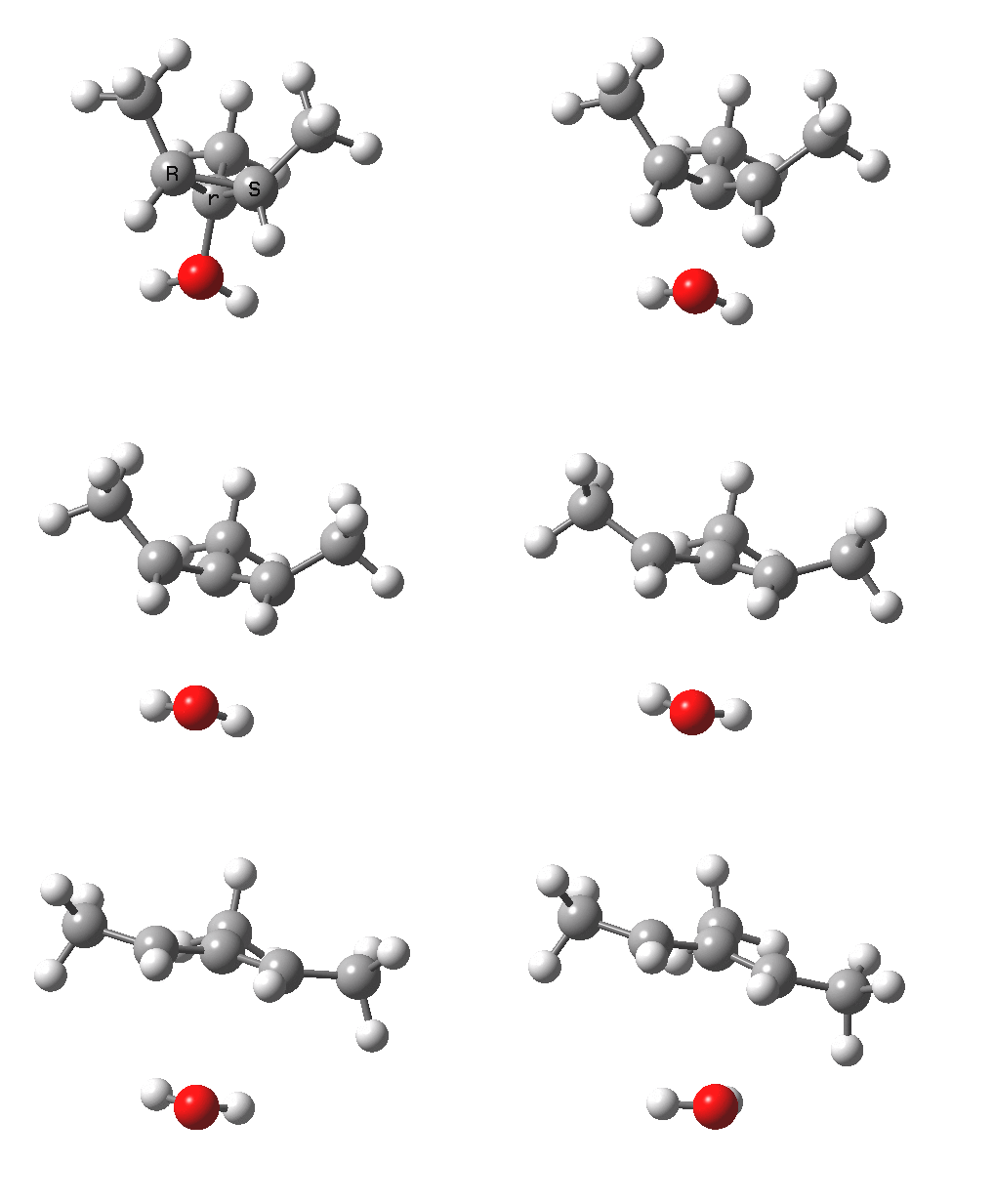
Note that in the transition state model, the leaving group (protonated water in this model) has not entirely departed before the electrocyclic ring opening starts. In reality, the SN1 solvolysis and the electrocyclic pericyclic may in fact be synchronous with each other, rather than comprising two separate and distinct steps.
Both together constitute a single concerted process, a sort of mechanistic morpheme taking the form of a solvolytically-assisted pericyclic reaction.
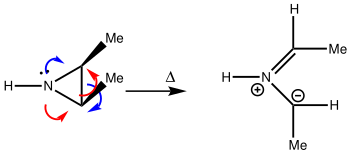
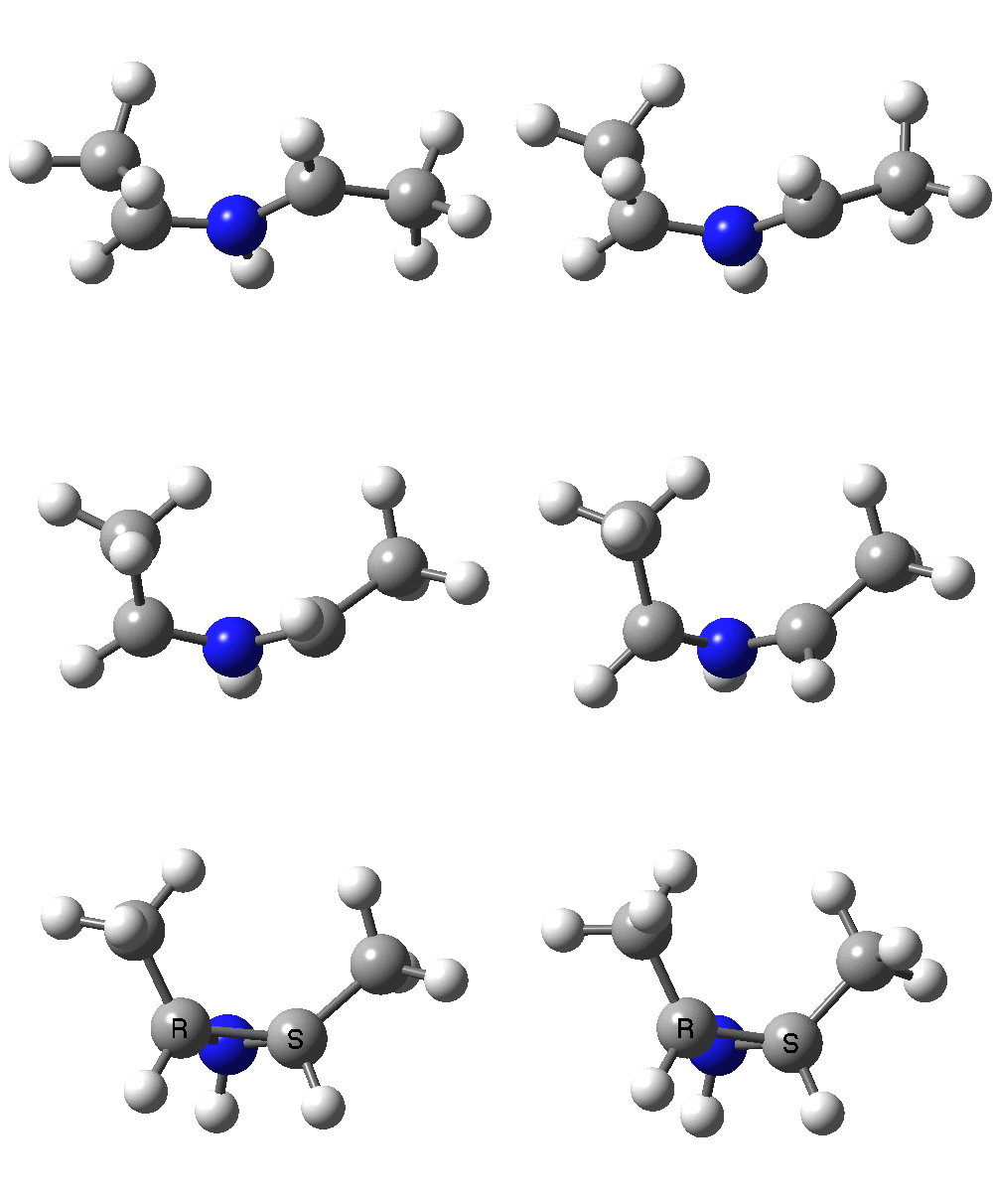 |
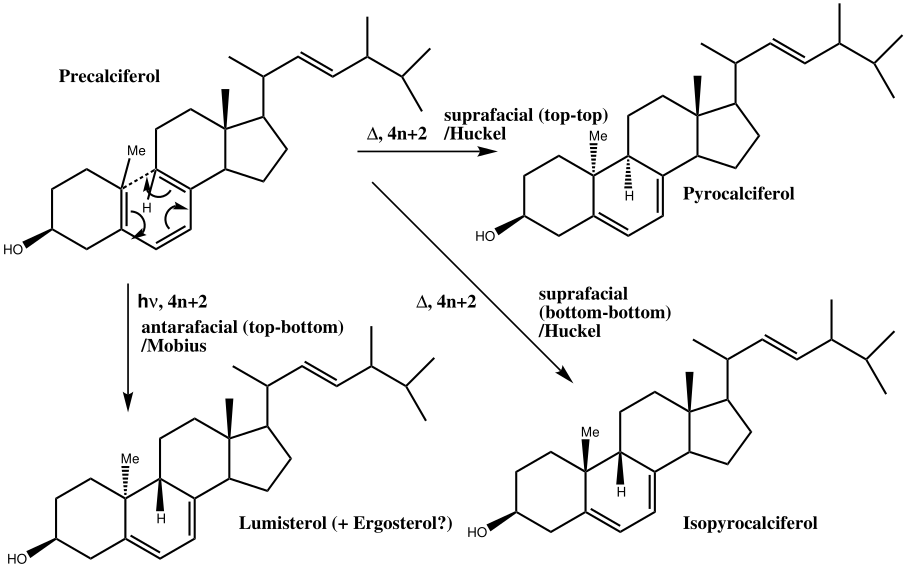
In fact, when first discovered in 1961, the origins of this stereochemistry rather baffled the authors (Havinga and Schlatmann, DOI: 10.1016/0040-4020(61)80065-3), and the effect was not followed up.
Another in the category of missed Nobel prizes was the reaction Corey reported in 1963, where what is described as a key element in the synthesis of dihydrocostunolide was the ring opening shown below (10 in the article).
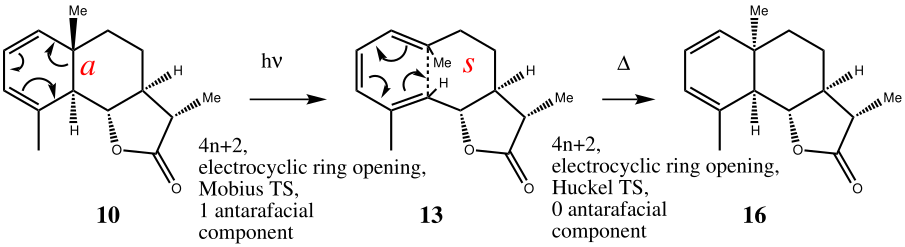
This is a 4n+2 electrocyclic photochemical ring opening which proceeds antarafacially with conrotation, followed by a thermal 4n+2 recyclisation proceeding suprafacially with disrotation. Had either of these pairs of authors spotted the stereochemical significance and commented on it, we might now be talking about the Havinga and Schlatmann or the Corey rules rather than the Woodward-Hoffmann rules!
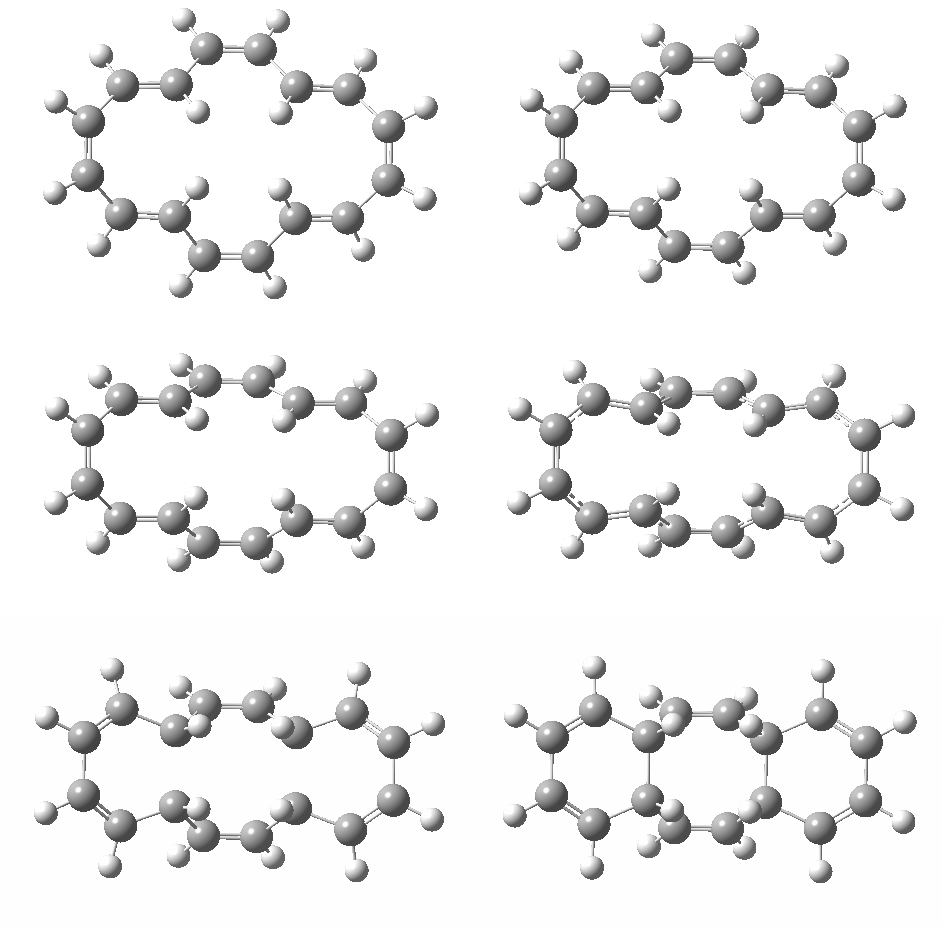
One important aspect when counting electrons is to include only the cyclically conjugated system. In the example below (DOI: 10.1002/anie.196708701) for one valence-bond conformational isomer (with a Cs plane of symmetry and hence formally at least being a 4n-electron Hückel antiaromatic) of a [16] annulene, the arrow pushing gives rise to two independently cyclic six electron (4n+2) electrocyclic reactions, and the electrons in the central double bonds are NOT counted in the process, since they are simply spectators and hence 4 of the 16 electrons do not participate (in what would otherwise be a forbidden π4s+π4s cycloaddition). The two outer rings are 4n+2 Hückel-aromatic transition states, the central ring is a Hückel 4n-electron anti-aromatic spectator. In fact, if the two electrocyclic reactions proceed consecutively rather than concurrently, the Hückel anti-aromaticity in the central ring is also avoided and this is actually what happens.
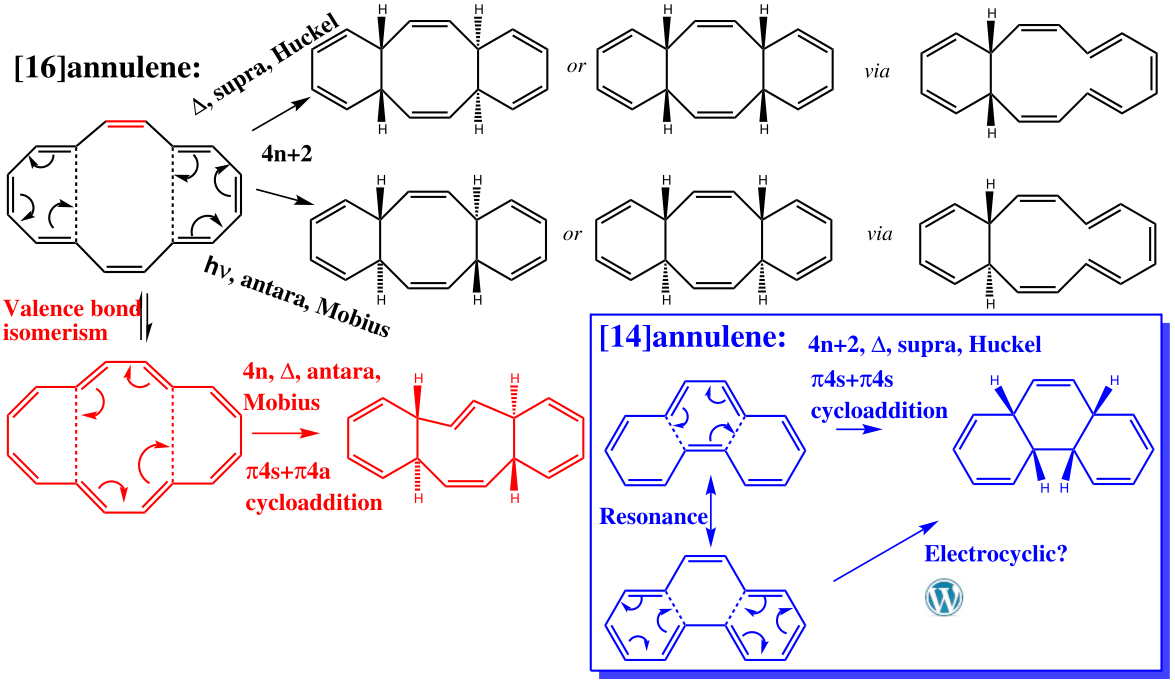
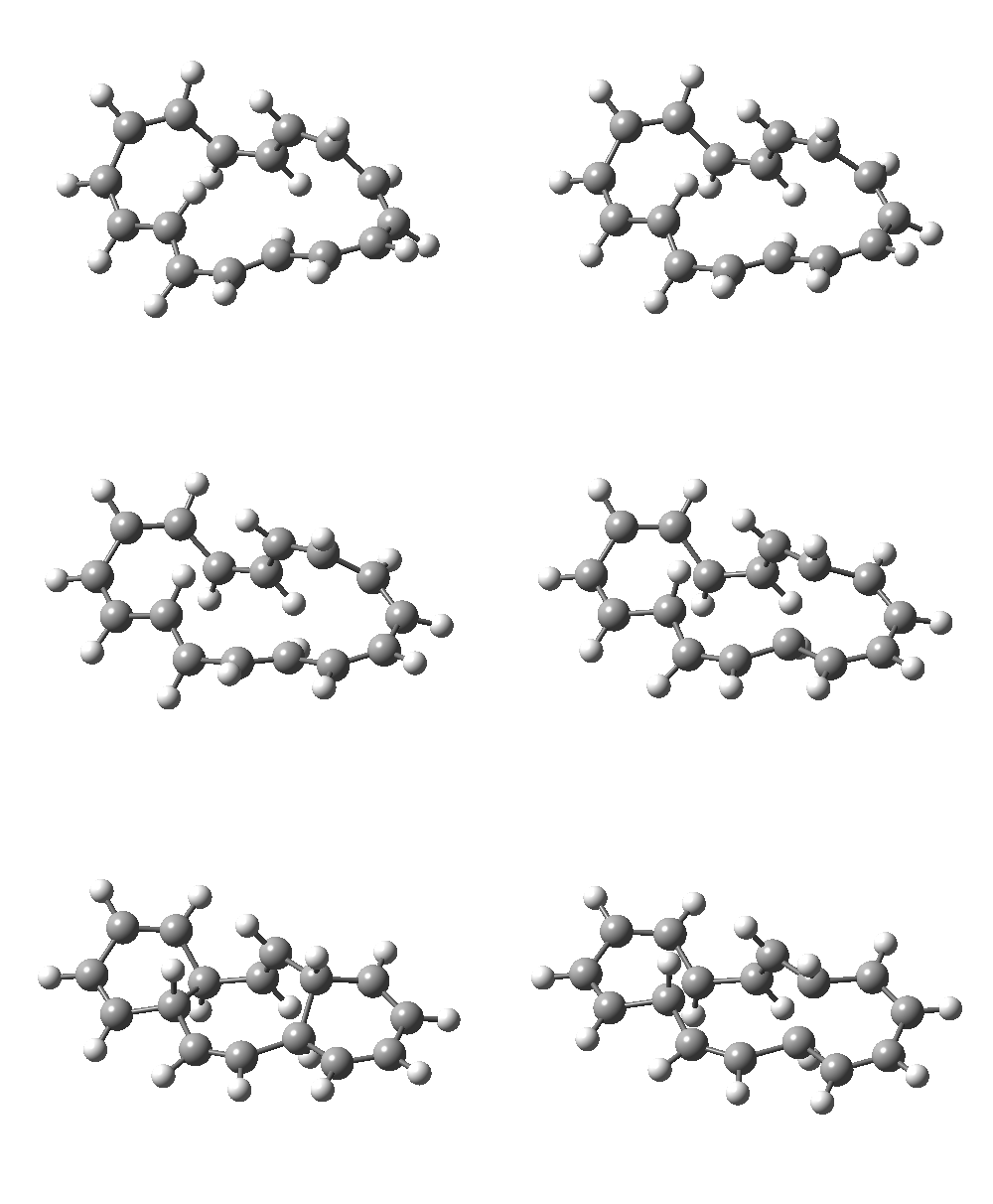
If the [16] annulene is drawn as a different valence bond isomer, it can have a different conformation because the central C=C bond changes to a C-C bond and rotation about this bond can now occur at room temperatures. This new conformation has a C2 axis of symmetry instead of a plane, and so 4n-electron Möbius aromaticity takes over for both the annulene and the transition state for cyclisation, and one now gets a π4a+π4s cycloaddition with one antarafacial component in the central region. This time the dienes and their 8 electrons at each side are simply spectators (in what would otherwise constitute two dis-allowed conrotatory 4n+2 electron electrocyclisations). The central ring is a 4n-electron Möbius-aromatic transition state, the two outer rings are 4n+2-electron Möbius anti-aromatic spectators. In part because this mode has two (spectating) anti-aromatic rings, it is 14.8 kcal/mol less stable than the previous Hückel mode.
| 4n+2 Hückel: Plane of symmetry |
4n Möbius: Axis of symmetry |
 |
 |
. A related story for the smaller [14]annulene, which also has unexpected outcomes.
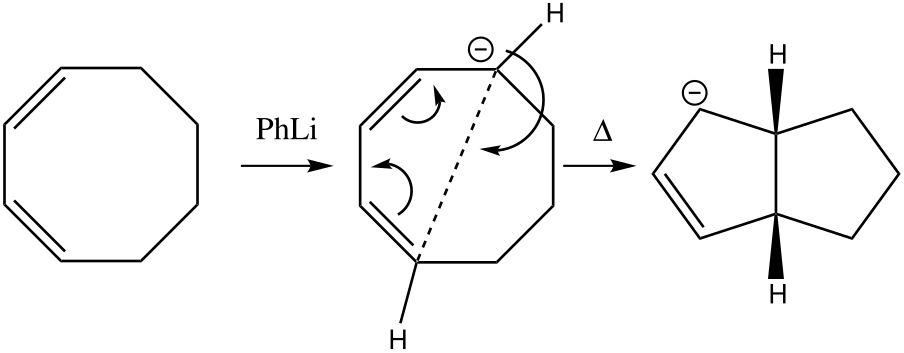
Carbanions contribute 2 electrons to the total count, the reaction proceeding suprafacially (DOI:10.1016/0040-4020(78)80226-9:)
 |
 or
or