
|
||||||||||||||||||||||||||
|
 |
 |
 |
|||||||||||||||||||||||
Can Cubane be used as a new generation of fuel? |
||||||||||||||||||||||||||
The gasolines available from the market now, normally used for powering cars and other vehicles, are constituted by blends of hydrocarbons with an end distillation point not higher than 220°C, obtained from petroleum or petroleum cuts. The gasolines are characterized by a certain number of characteristics, but the amount of energy supplied by a given amount of fuel, which is converted into work, is of the primary importance. The available of heat of gasoline is about 10,500kcal/kg. Having available gasolines with higher heat values than gasolines presently available is important. This can be done by adding cubane molecules into it. Hydrocarbon cubane on its mono-alkyl or dialkyl-derivative which has a high energy content, can be used for direct-ignition internal combustion engines. Cubane can make up to 90% of the volume. Although it is thermodynamically unstable, cubane is kinetically stable up to 200°C. The bond angle is much less than normal tetrahedral angles and makes cubane contains a lot of the stain energy. This makes the consequent combustion heat energy to be more negative compare to normal non-strain system. The incorporation of such high energy levels in such a compact system is exploited in the compositions. The mixture is capable of developing a higher combustion heat per volume. Also taking advantage of high density, more molecules can be packed in a unit volume. Cubane overall has good main advantage : 1: The heat value, of 11,115kcal/kg, which enables this substance to store an energy content about 5% higher than a conventional gasoline. 2: The stoichiometric mixing ration of 13.2kg of air of cubane, which makes it possible, with the amount of air intaken by the engine being the same, a complete and regular combustion of cubane in an amount of 9% by weight higher than conventional gasoline, to be obtained. With the two factors above, the engine operating conditions being unchanged, in an increase in the energy content of cubane of about 14% as compared to a conventional gasoline. |
||||||||||||||||||||||||||
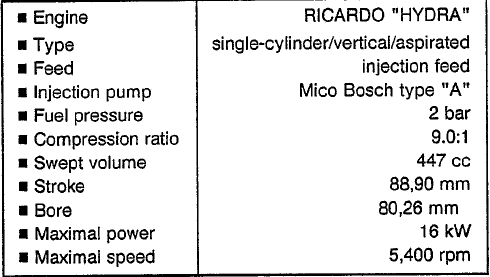
Experimental check: |
||||||||||||||||||||||||||
 |
||||||||||||||||||||||||||
 |
 |
|||||||||||||||||||||||||
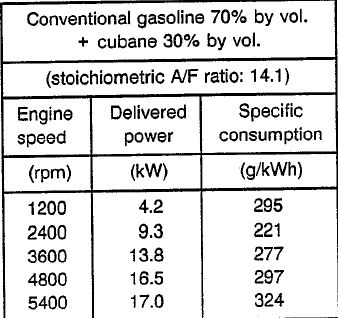
| One can observe that, when the composition contains 30% by volume of cubane is used, increases in engine delivered power comprised within the range of from 5.0 to 6.4% and decrease in consumption values comprised within the range from 1.0 to 1.6%, are obtained. | ||||||||||||||||||||||||||