
First discovered as a potential drug in 1987 by 2Buckett et al , Subutramine ({1-[1-(4-chloro-phenyl)-cyclobutyl]-3-methyl-butyl}-dimethyl-amine) was first investigated for its potential antidepressant properties. As mentioned in the Chemistry section, Sibutramine behaves as a serotonin and norepinephrine uptake inhibitor. In particular, the ability of Sibutramine to reduce the uptake of serotonin was of particular interest.
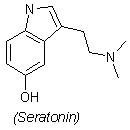
Serotonin is a neurotransmitter, and promotes a feeling of wellbeing and happiness, however the concentration is carefully controlled by the body - if levels are too high, their production is stopped and the existing levels in the body are reabsorbed. Sibutramine works by blocking this last mechanism; if the body never recovers the neurotransmitters from the bloodstream, the person continues to feel happy.
While work was proceeding on the potential as an antidepressant, a patent was filed in the US in 1990 by Kiyoharu Ukai et al. noting Sibutramine's effectiveness in the treatment of cerebral function disorders such as Parkinson's disease. Further to this, sibutramine and more potent derivatives such as demethylsibutramine (DMS) were discovered to have potential in treating sexual dysfunction by Jerussi, et al. in 2002. Thoughout 2002, Mendel et al. filed a series of patents, claiming that Sibutramine was effective in treating addictive disorders, pulmonary hypertension, cardiovascular disease, Chronic Fatigue Syndrome, hyperactivity disorders, menstrual dysfunction and orthostatic hypotension.
|
Work on the potential of Sibutramine as a novel new antidepressant continued for about 6 years, especially as it appeared not to have the side effects of common antidepressants at that time; notably drowsiness, anticholinergic effects, orthostasis, and cardiotoxicity. In 1995 however, Kelly et al. discovered that amongst Sibutramine's other effects was a noticible decrease in weight amongst obese patients, leading to its modern use as an anorexiant to help clinically obese patients lose weight. |

|
Despite promising much as an antidepressant, either its properties in this field were never fully evaluated or clinical trials were never published. This may be due to poor results, however the fact that it has been verified as a serotonin uptake inhibitor means that, pharmacologically speaking at least, it should be an effective antidepressant.
Its modern use as an anorexiant started in 1997 when the FDA in America approved the drug for use in treating clinically obese people. Knoll Pharmaceuticals now market sibutramine in it's HCl monohydrate form as MeridiaTM and ReductilTM.